

Lean Manufacturing History
Lean Manufacturing takes into consideration the following statement, an adequate production technically speaking, but not acceptable in terms of cost, will have no interest for any company.
How did the management models of the companies develop?
Since twentieth century, it began to emerge the idea of the company organization as a science and all the ideas related to cost and efficiency began to be much more important.
With Frederick Winslow Taylor, "scientific management" was created, and the idea of mass production and scale economies emerged, being based on the scientific method, division of labour and time and incentives analyisis.
The principles of management, organization and structur of companies were developped by H. Fayol.
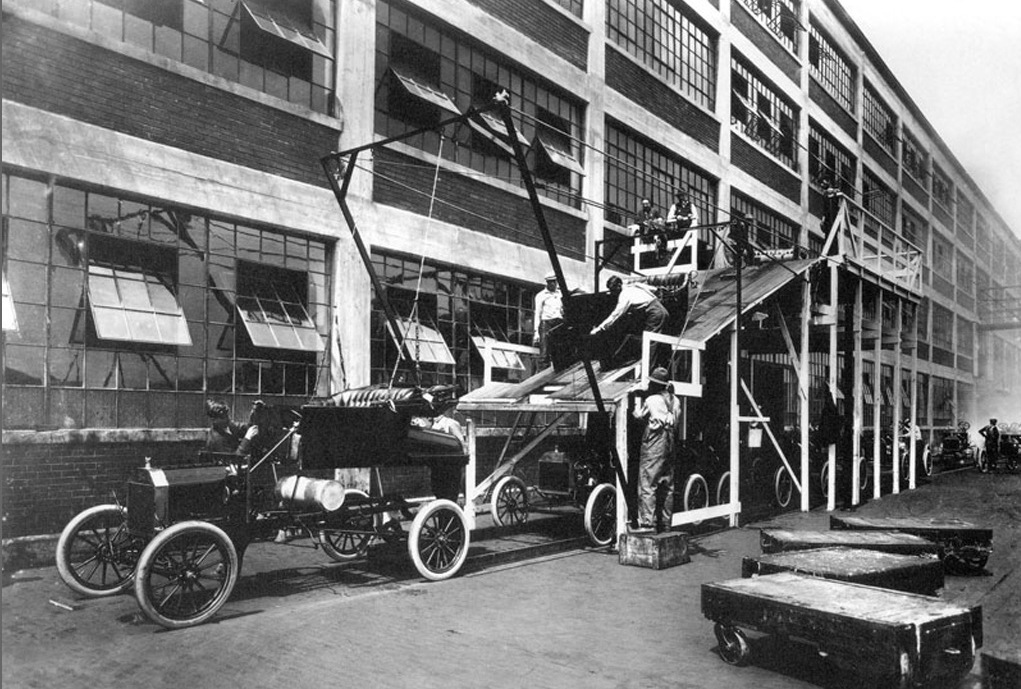
All this knowledge was materialized in the industry with Henry Ford, who, in 1913 took the information of production systems and management explained above with the vehicle model Ford T, and he was able to reduce the manufacturing time from 12,5 hours per vehicle to only 1,5 hours. Below you can see an image of the assembly line of the Ford T.
Afterwards, this "scientific management" began to take into account aspects more related with human behaviour motivations to reach improvements in productivity, especially with the creation of work incentives.
Currently the most important management methods are the following:
- Mass production from Ford and Taylor: based on production of big quantities of products with the purpose of reducing the cost.
- Totyota Production System - TPS, based on JIT (Just in Time) principles and Jidoka, with ensured quality and minimal utilization of resources with great flexibility.
- Management system based on theory of constraints and bottlenecks, developped by Eliyahu Goldratt. During the nineties it came up a similar productyon system called synchronized production. You can find more information about this in the category Production - Theory of Constraints.
Toyota Production System (TPS)
Toyota Production System was driven by Toyoda family, and it has two fundamental pilars:
- JIT: Processes oriented to add value for the customer by minimizing all the wastes of resources.
- Jidoka: Realization of activities in a correct way in a production process, generating quality without having to do unneccesary activities.
Let's see below a brief summary about the history of TPS.
Looms and rise of Jidoka
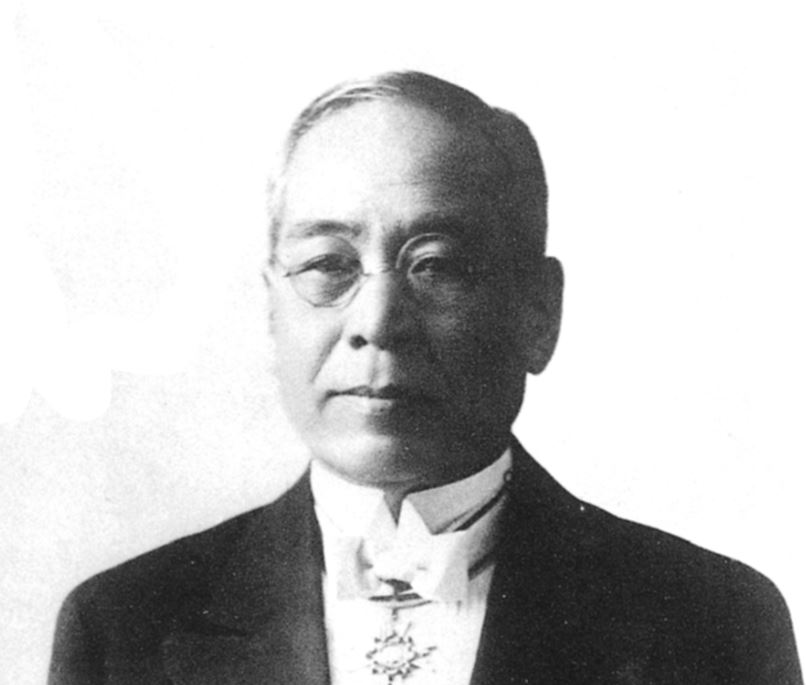
Around 1924, a japaneese guy, Sakichi Toyoda, in a loom factory of his family, developped probably the most advanced machine for production of looms at that time, which had the ability to detect each thread with a quality defect and made that the machines stop avoiding the need of having a person dedicated to quality control, introuducing the concept of Jidoka. Sakichi is also the father of continous improvement and the 5-whys technique.
A new emerging industry: Automotive industry
There was a big earthquake in Japan which destroyed the railway network and Sakichi Toyoda, who had heard about the success that was having a new emerging industry, the automotive industry based in the internal combustion engine, decided to sell all the patent applications that he had for his automatic loom machine and authorized to his son Kiichiro Toyoda to have all that money to bring that new industry to his country, Japan.
The Foundation of Toyota Motor Company
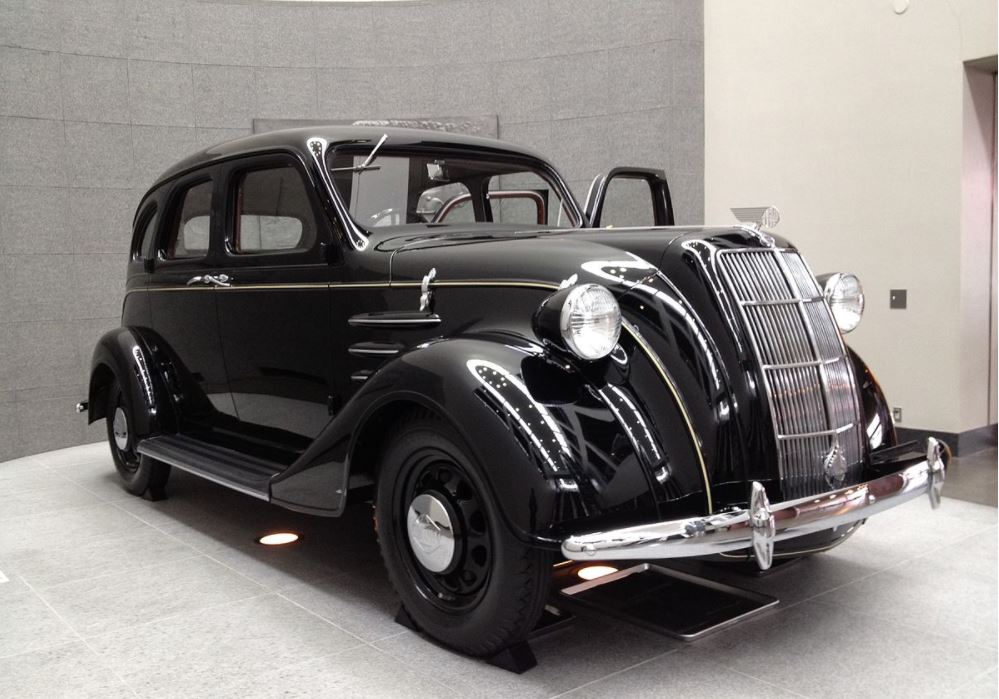
After several trips to United States learning about internal combustion engines, in 1933 Kiichiro Toyoda founds Toyoda Automotive (as a division of the existing looms company), launching the first model in 1935, the Toyoda AA (below picture). Afterwards, due to spelling reasons, Toyoda became Toyota, and Toyota Motor Company is founded in 1937 as an independent industry. Kiichiro Toyoda is the father of Just-In-Time philosophy, which as he explained, in a manufacturing process there should not be shortage or excess of parts, the parts should not "wait", they should flow along the process.
Eiiji Toyoda and his trip to US: The supermarkets
After second world war, which wreaked havoc along the world, Eiji Toyoda, Kichiro Toyoda's nephew followed the Lean Management of his predecessors. In 1950 he had a business trip also to United Statest to take some ideas related to the methods being used there to organize the production, but he realized that he would not be able to adopt the mass production ideas from Henry Ford in the japaneese market because of the smaller size and segmentation of it. However he was impacted by supermarkets organization in the United States in which it was only replenished what was consumed and he took this concept of "supermarket" for production, replenishing only what was consumed. All this work was done together with the help of the very well known industrial engineer Taichii Ohno, and they were able to develop a system that in spite of not working with big sized batches of production, was able to work with a low cost, fast delivery, optimal quality and flexibility, which means business excellence.

The spread of Lean Manufacturin ideas in Europe and US
From the sixties, Lean Manufacturing started to be known and applied in Europe and United States. The ambassadors of this discipline were James Womak and Daniel Jones with their book "The machine that changed the world" (published in 1991). In this book, after five years of investigation, they explain all the production factors that made Toyota a leader in the automotive industry.